Jokes for Cats

Jokes for Cats

Jokes for kids: Cats
Cats are the target of many great children’s jokes and these cat jokes for kids are no exception. Print these out for the kids and all of their friends can share in the laughter cats bring into the world!
Number of players:
2+
Activity:
Q. What do cats read in the morning?
A. Mewspapers!

Q. There were four cats in a boat, one jumped out. How many were left?
A. None. They were all copy cats!

Q. What is a cat’s favourite color?
A. Purrr-ple

Q. What game did the cat like to play with the mouse?
A. Catch!

Q. Where did the school kittens go for their field trip?
A. To the mewseum.

Q. What kind of cats like to go bowling?
A. Alley cats!

Q. Why do cats make terrible story tellers?
A. They only have one tail.

Q. What do cats eat for breakfast?
A. Mice Crispies.

Q. Why did the cat run away from the tree?
A. Because it was afraid of the bark!

Q. Why is it so hard for a leopard to hide?
A. Because he’s always spotted.
Fool jokes

Fool jokes

Fool jokes
Try and fool the kids with these great jokes all about fools. The kids will love passing these onto their mates at school or even their teachers and for a moment, just a moment, they might get one up on you!
Number of players:
2+
Activity:
Q. Why did the fool climb the glass wall?
A. To see what was on the other side.

Q. How many fools does it take to change a light bulb?
A. Three. One to hold the globe and two to turn the chair.

Q. How did the fool break his arm raking leaves?
A. He fell out of the tree.

Q. What happened to the foolish tap dancer?
A. She fell in the sink.

Q. How do you sink a submarine full of fools?
A. Knock on the door.

Q. How do you get a one armed fool out of a tree?
A. Wave to him.

Q. How do you keep a fool in suspense?
A. I’ll tell you tomorrow.

Q. How do you make a fool laugh on a Sunday?
A. Tell him a joke on Saturday.

Q. How do you know when a fool has been using the computer?
A. There is white out on the screen.

Q. Three fools were driving to Disneyland when one saw a sign that said “Disneyland left”. What did they do?
A. They went home.

10 Maths riddles for kids

10 Maths riddles for kids

10 Maths riddles for kids
Some kids find maths a little dull – but it doesn’t have to be! Here’s a great way to make maths fun for kids. Let these brain teasers get their minds moving. Who knew numbers could be so much fun!
Number of players:
2+
Activity:
Q. If two’s company and three’s a crowd, what are four and five?
A. 9
Q. If there are four apples and you take away three, how many do you have?
A. You took three apples so obviously you have three.
Q. Where do fish keep their money?
A. In the river bank.
Q. Two fathers and two sons go fishing. Each of them catches one fish. So why do they bring home only three fish?
A. Because the fishing group comprises a grandfather, his son, and his son’s son – hence just three people.
Q. I add five to nine, and get two. The answer is correct, but how?
A. When it is 9am, add 5 hours to it and you will get 2pm.
Q. The ages of a father and son add up to 66. The father’s age is the son’s age reversed. How old could they be?
A. There are three possible solutions for this: the father-son duo could be 51 and 15 years old, 42 and 24 years old or 60 and 06 years old.
Q. What weighs more – a pound of iron or a pound of feathers?
A. Both would weigh the same – come on, a pound remains a pound, irrespective of the object!
Q. If a rooster laid 13 eggs and the farmer took eight of them and then another rooster laid 12 eggs and four of them were rotten, how many of the eggs were left?
A. Roosters don’t lay eggs!
Q. I am an odd number; take away an alphabet and I become even. What number am I?
A. Seven (SEVEN-S=EVEN)
Q. Using only addition, how can you add eight 8’s to get the number 1,000?
A. 888 +88 +8 +8 +8 =1,000

10 Easy riddles for kids

10 Easy riddles for kids

10 Easy riddles for kids
Riddles and jokes – kids love them! Get the kids giggling with these great riddles. They’ll love to test them out on their friends and family. They’re sure to get a fair few laughs – and groans! – at the next family get together.
Number of players:
2+
Activity:
Q. What has a face and two hands but no arms or legs?
A. A clock!

Q. What is the easiest way to double your money?
A. Put it in front of the mirror of course!

Q. What has a thumb and four fingers but is not alive?
A. A glove.

Q. What has to be broken before you can use it?
A. An egg.

Q. What has a neck but no head?
A. A bottle.

Q. What gets wetter as it dries?
A. A towel.

Q. What goes up and doesn’t come back down?
A. Your age.

Q. What belongs to you but is used more by others?
A. Your name.

Q. Everyone has it and no one can lose it, what is it?
A. A shadow.

Q. It’s been around for millions of years, but it’s no more than a month old. What is it?
A. The moon.

Magnetic paper clip experiment

Magnetic paper clip experiment

Magnetic paper clip experiment
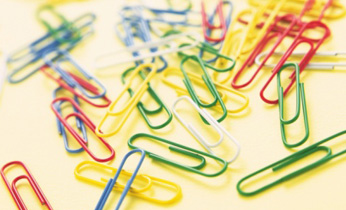
Science experiments are fun to do and great for children to learn. This magnetic paper clip experiment is simple to do and will teach your kids about magnetic forces.
What You Need:

Magnet
Paper clips
Activity:

Hang one paperclip from the magnet.

Use the hanging clip to pick up other paper clips.

See how many paper clips you can pick up using only one magnet.

You can also try this with different sizes of paper clips or paper clips that have plastic coating.

Ice play

Ice play

Ice play
Inspire your child’s imagination with ice play, a great science experiment kids activity that may just spark a lifetime of scientific curiosity. Kids love to explore the unknown so dive into this fun science project today.
Number of players:
1+
What you need:
balloons
water
freezer
Activity:
Different shaped balloons work best with this activity.
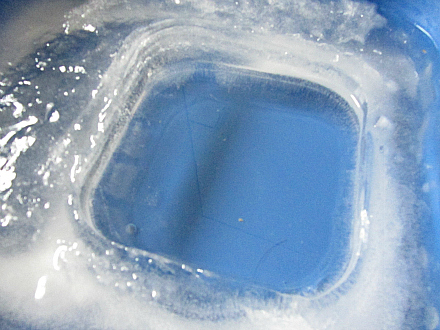
Select balloons of different shapes, fill them with water and place them in the freezer overnight.

When they are frozen, cut away the balloons and place them on the first step of the pool.
Allow your child to play with the shape and watch the shape change as the warmer water starts to melt it.

You can spice this up with a bit of food colouring in an eye dropper if you are not in the pool
Let them squeeze drops onto the shape and watch the colour of their ice shape change.

Make coloured flowers

Make coloured flowers

Make coloured flowers
Children love to learn and experiment with new things. Science experiments are fun to do and are a great way for children to learn about the world around them. Try this coloured flower experiment with your kids.
What You Need:

water
scissors
food colouring
plastic cup
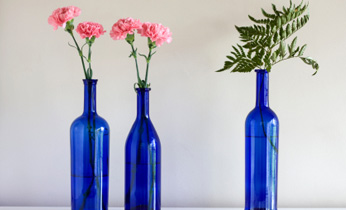
flower, white carnation or celery stalk with leaves
Activity:

Fill up a plastic cup with water.

Add a few drops of food colouring to the water.

Cut the end off the flower stem or celery stalk.

Put the flower stem or celery stalk in the water.

Over the next six to 12 hours, the food colouring will be drawn up the stem along tiny tubes which are called vessels and the petals of the flower will start to change in colour.

Indoor rainbow

Indoor rainbow

Indoor rainbow
Everyone loves seeing a rainbow. With this cool activity you can now have a rainbow inside even if it hasn’t been raining. Follow the simple steps and your house will be full of rainbows in no time.
Number of players:
1+
What you need:
small mirror
circular glass jar or large plain drinking glass filled with water
torch
Activity:
Place the small mirror inside the jar or glass.
Make sure the mirror is slightly tilted upwards.
Then take your glass into a very dark room with white walls.
Shine your torch onto the mirror and watch as the colours of the rainbow appear.

How do seeds grow experiment

How do seeds grow experiment

How do seeds grow experiment
Science experiments are fun to do and a great way for children to learn. Your children will enjoy observing with this science experiment and watching the seeds grow.
What You Need:

Paper towel
Pencil
3 different seeds, for example corn, beans, radish
Stapler
Ziplock plastic bag
Water
Activity:

Fold the paper towel in half.

Poke three small holes using a sharp pencil, equally spaced along the fold of the paper towel.

Place the seeds over the top of the holes.

Fold the paper towel back and staple up the side to make a pouch.

Place the paper towel into a ziplock bag.

Pour a small amount of water into the ziplock bag (the paper towel should end up damp).

Do not close the bag, leave it open.

Hang your experiment on the wall in a bright location.

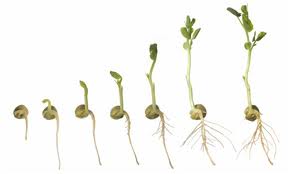
Watch over the coming weeks as the seeds germinate and begin to grow.

Jumping pepper science experiment

Jumping pepper science experiment

Jumping pepper science experiment
Science for kids is fun and exciting. Watch the kids learn and discover new things all the time. The best part is – science is fun.
Number of players:
1+
What you need:
pepper
plastic box
woollen scarf
Activity:
Sprinkle a thin layer of pepper into a small see-through plastic box.

After putting the lid on, rub the lid with a woollen scarf for 30 seconds.

After the 30 seconds, watch the lid.

You should be able to see specks of pepper jumping up and hitting and sticking to the lid of the box. Why?

Rubbing the lid with the woollen scarf creates a build-up of static electricity, which attracts the pepper.