Frozen Chocolate-Covered Bananas

Frozen Chocolate-Covered Bananas

Frozen Chocolate-Covered Bananas
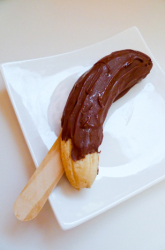
Who doesn’t want a healthy and tasty dessert on a hot summer evening? Trade the butterfat and sugar of ice cream for the sublime sweetness of a frozen chocolate-covered banana. This fun and simple dessert is easy for kids to create themselves, and will please the whole family.

What You Need:
4 ripe bananas
4 craft sticks
1 bag of chocolate chips
Small saucepan along with a metal or glass bowl that fits over the top
Spatula
Parchment paper
Plate
What You Do:

Invite your child to peel four ripe bananas, then gently press the craft sticks into the bananas at one of the ends and just slightly to the side.

Now your child can place the bananas on a sheet of parchment paper placed on a plate. Next, she can place those bananas in the freezer to prep them for the next part of the recipe.

Help your child fill half of a small saucepan with water and simmer it over medium heat. She can place the metal or glass bowl over the top of the pan, which creates a double-boiler.

Now she can put the chocolate chips in the glass bowl and gently stir with the spatula until the chocolate is melted. Offer help as needed – the saucepan will be hot!

Once all the chocolate has melted, invite your child to turn off the heat and get the bananas out of the freezer.

Now she can dip the cold bananas in the chocolate, using the spatula to help coat them as necessary. Once each banana has been coated, your child can place them back on the parchment covered plate and then back in the freezer.

Let the chocolate-covered bananas chill in the freezer for at least an hour before giving them a taste.
 

Make Ice Cream in a Baggie!

Make Ice Cream in a Baggie!

Make Ice Cream in a Baggie!
Based on the concept of water’s “freezing point,” this activity entails lowering the freezing point to chill another substance—in this case, ice cream! Sure, the potential for making a mess seems likely, but you’ll be surprised at the ease and “delicious” fun you’ll have with your child when you make ice cream in a baggie!

What You Need:
1 quart resealable plastic bag
1 gallon resealable plastic bag
¼ cup of sugar
¼ teaspoon of vanilla flavoring
½ cup of whole milk
Rock salt
Ice cubes
Thermometer
Measuring cup
Polyfoam or Styrofoam cups
Plastic spoons
What You Do:
Have your child place 1/4 cup of sugar, 1/2 cup of milk, and 1/4 teaspoon vanilla flavoring into a 1-quart plastic bag, securely seal the bag, and mix well.

Next, add 2 cups of ice to a 1-gallon plastic bag.

Add between 1/2 and 3/4 cups of rock salt to the gallon bag.

Place the sealed quart bag into the gallon bag. Close the larger bag securely.

Holding the large bag by the top seal, gently rock the bag from side to side. Kids should not hold the bag in their hands, as it will be too cold and could cause damage to their hands.

Continue rocking the bag until the contents of the quart bag have solidified.

Have your child remove the frozen contents (ice cream) from the quart bag and place in cups to consume. Yummy!
What Happened?

Just as we use salt on icy roads in the winter, salt mixed with ice in this case causes the ice to melt. That’s because when salt comes into contact with ice, the freezing point of the ice is lowered. By lowering the temperature at which ice is frozen, one is able to create a situation in which the milk mixture can freeze at a temperature below the freezing point of the ice cream mixture.

An alternative to the plastic baggie method is to use empty coffee cans. The recipe is the same, but this time place the mixture in a standard size coffee can and seal with the plastic lid, then place that can inside a larger coffee can. Pack the large can with ice and salt, and seal with the lid. Have your child the roll the can back and forth on the floor until the ice cream is set. Once again, “happy” eating!


Bake Fall Leaf Cookies

Bake Fall Leaf Cookies

Bake Fall Leaf Cookies
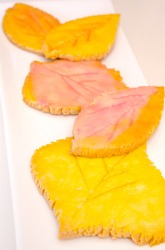
Your child can turn cookie dough into a big pile of colorful painted fall leaves ready for eating! Along with being very flavorful, they are wonderful fall gifts for friends and family.

What You Need:
½ c room temperature butter
½ c sugar
1 egg
¼ teaspoon vanilla
Dash of salt
1 ½ c flour
Mixing bowl
Hand mixer
Spatula
Sketch paper and pencil
Rolling pin
Butter knife
Sheet pan
Powdered sugar
Red and yellow food coloring
Paintbrushes
Water
What You Do:
Invite your child to measure and add the butter, sugar, vanilla, salt, and egg to the mixing bowl. She can use the spatula to break up the butter and then, with some adult supervision, use a hand mixer to whip everything together.

Now she can do a little math to figure out how to divide the amount of flour needed by thirds. Along with making tasty cookies, she’s learning math skills! Once she’s figured out the correct measurement, she can add a third of the flour and stir, then another third and stir, and finally the last of the flour.

Next your child can place the sugar cookie dough in the fridge for 20-minutes to set-up.

While she’s waiting, invite your child to sketch out leaves on a piece of sketch paper. She can take a look outside for fall leaf inspiration!

Invite your child to preheat the oven to 350 F. and lightly dust a clean work surface with flour. Now she can place half of the cookie dough on the work surface, dust with a bit more flour, and roll until about ¼ inch thick.

Offer your child a butter knife to cut leaf shapes from the sugar cookie dough and then place on the sheet pan.

Once she’s filled the pan with lots of leaf shapes, pop the cookies into the hot oven for about 12 minutes.

While the cookies are baking, she can mix up the colors for painting her cookies. Your child can place 2 Tbsp of powdered sugar into a small cup and then add a few drops of red food coloring. Now she can do the same with another 2 Tbsp of powdered sugar, another small cup, and a few drops of yellow food coloring. She can finish the paints with a couple of drops of water, using clean paintbrushes to mix.

Once the cookies have cooled, invite our child to use her edible paints to finish her fall leaf cookies. She can blend the edible paints while painting the cookies or paint them all one color.

Chinese Dumpling Recipe

Chinese Dumpling Recipe

Chinese Dumpling Recipe
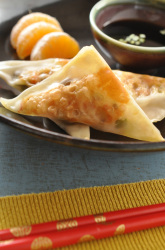
Dumplings, also known as potstickers, are traditional fare during Chinese New Year. These tasty little pockets, filled with meat and veggies and doused in a savory sauce, are a fun way for older children to practice their culinary skills—like measuring ingredients, chopping vegetables and handling food safely. Folding up the filled wrappers is an especially entertaining challenge for younger cooks, and the final product tastes delicious!

What You Need:
1 lb. ground pork or chicken
1 cup napa cabbage, finely shredded
¼ c shredded carrots, finely shredded
¼ c. mushrooms, finely minced
1-2 cloves garlic
1 tsp. minced fresh ginger
1 tsp. sesame oil
1 Tbsp. soy sauce
1 tsp. canola oil
1 tsp. white vinegar
1 egg
1 package square wonton wrappers
Vegetable oil for cooking
What You Do:
Combine all ingredients except the wrappers and vegetable oil in a large mixing bowl.

Pour some water into a small bowl and set it near your workspace.

Scoop a spoonful of the mixture onto a wonton wrapper.

Dip your finger into the bowl of water and trace the edge of the wrapper to wet it.

Carefully fold the wrapper in half diagonally to form a triangle. Press gently where the edges meet to seal it closed.

Repeat the process until all the wrappers are filled!

Pour a small amount of vegetable oil into a large frying pan and heat over medium heat.

Place the filled dumplings in the pan and cook until they are browned, about 2-3 minutes. Use tongs or a spatula to turn the dumplings over and brown the other side.

While the dumplings are browning, place a vegetable steamer basket inside a pot of water, making sure the water level is below the steamer basket. (A colander resting on the rim of the pot will also work if you do not have a steamer basket.)

Heat the water until boiling and carefully place a single layer of dumplings in the steamer basket. You may need to steam them in several batches if your steamer basket is small.

Cover and steam the dumplings until they are soft and the meat is cooked through, about 10-20 minutes.
Serve with soy sauce for dipping and enjoy!

Serve your dumplings with rice and veggies and you have a complete meal!


Raspberry Hot Chocolate

Raspberry Hot Chocolate

Raspberry Hot Chocolate
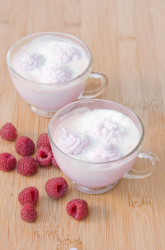
This chocolate is white hot – in a good way! Mix things up and share a mug of this homemade cocoa and whipped cream with your kids. Whole raspberries pink things up for a sweet Valentine’s Day.

What You Need:
1 8-ounce container of fresh raspberries
3 tablespoons sugar, divided
2 cups milk
2 cups cream, divided
6 ounces (1/2 bag) white chocolate chips, found in the baking section of your grocery store
What You Do:
In a small saucepan over medium low heat, stir together the raspberries and 1 tablespoon sugar and cook until the raspberries burst and the sugar dissolves in the berry juices!

With a strainer set over a bowl, pour the mixture into the strainer; use a rubber spatula to push against the wire mesh to release as much liquid as possible. Set aside.

To make the hot chocolate:

In another saucepan over medium heat, combine the milk and one cup cream. Remove from heat immediately upon reaching a simmer and whisk in the white chocolate chips until melted.

Add 1-2 tablespoons of the raspberry puree to flavor the hot chocolate.
To make the whipped cream:

In a stand mixer fitted with a whisk attachment, add the remaining one cup cream, 2 tablespoons sugar, and 3 tablespoons of the raspberry puree and whisk on high until medium peaks are formed.

Divide the cocoa into 4-6 mugs and top each with a dollop of whipped cream.

If you make this for Valentine’s breakfast, consider refrigerating some of the whipped cream to top on brownies later that evening for Valentine’s dessert!

Ghoul Guts Squash Soup

Ghoul Guts Squash Soup

Ghoul Guts Squash Soup
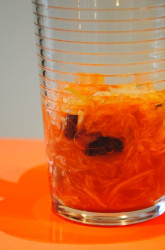
Stringy orange ghoul guts are actually a healthy and gross-looking appetizer for your child’s Halloween party. The recipe calls for a cooked spaghetti squash, tomato sauce and raisins to create the perfect texture of horror. When mixed together and served in clear glasses they can be gobbled down in one delicious slurp!

What You Need:
Spaghetti squash
Tomato sauce or spaghetti sauce
Raisins
What You Do:
Cook the spaghetti squash in your oven or microwave. If using an oven, cut the squash in half and lay flat on a lightly greased baking sheet. Cook at 350 degrees for 30-45 minutes, or until you can easily puncture the skin of the squash with a knife. This is a great time to show your child how to set a timer.

Allow the squash to cool.

Warm up the tomato or spaghetti sauce in a pan.

Scoop out the seeds from the center of the spaghetti squash and discard, or roast the seeds just like pumpkin seeds for another treat! Fork out the “spaghetti” strands into a bowl.

Mix several tablespoons of the sauce into the squash. The squash texture should be stringy and not too saucy.
Sprinkle in a handful of raisins and mix together.

Scoop out the “ghoul guts” into a glass and serve! Devilishly frightening!


Green Eggs and Ham Recipe!

Green Eggs and Ham Recipe!

Green Eggs and Ham Recipe!
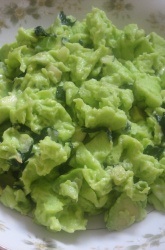
Looking for a fun and fanciful way to celebrate Seuss and Read Across America? Here’s a fool-proof and kid-friendly recipe for Green Eggs and Ham, inspired by Dr. Seuss’s classic book. In addition to being delicious, this dish is also quite nutritious! Your child will have a blast making this egg-cellent recipe in honor of the man who brought us the story of Sam I Am. Pick up a copy of Green Eggs and Ham and read along for some extra flavor!

What You Need:
1 teaspoon extra virgin olive oil
4 eggs
1/3 cup spinach, chopped
½ cup zucchini, diced
½ cup avocado, diced
Salt and pepper to taste
Ham, precooked, sliced and heated up
Green food coloring (optional)
What You Do:
In a dry pan over medium to medium-high heat, heat the ham through. Set it aside and keep it warm.
Heat a medium pan with a teaspoon of olive oil over medium heat.

While your pan is heating, beat the eggs in a small bowl and add two drops of green food coloring, if you are using it. Mix the eggs well.

Once the pan is hot, sauté the spinach and zucchini in the oil for a minute or two, until the spinach has wilted.

Carefully add the eggs to the pan and season with salt and pepper.

Stir the eggs constantly (but gently) and add the avocado. Be sure not to break up the avocado too much.

When the eggs are and no longer runny, move them to a platter with the ham.

Feel free to substitute other vegetables that your child might like better. Also, top the eggs with any of your child’s favorite additions such as green onions, shredded cheese or hot sauce. Enjoy!

Sprinkle in a reading of Dr. Seuss’s Green Eggs and Ham for some added Seussational flavor and a tribute to the man who was all about reading! Cooking with your kids is a great way to get them involved in the kitchen, making healthy choices about the foods they eat. Not to mention, it’s a great way for them to practice measurement skills and following directions.


Easy Summer Dinner

Easy Summer Dinner

Easy Summer Dinner
Nothing says summer quite like the image of perfectly ripe fruits and vegetables available in backyards and produce stands everywhere. Even still, it can be quite a challenge to get your child on board with the whole “eat your fruit and veggies” thing. So what to do? Get those kids in the kitchen! When kids become chefs and begin to take a major part in producing their own meals, they are much more likely to enjoy the food they helped make and eat it!

Note: These recipes include both “Kids in the Kitchen” and “Parent Prep” instructions for the simplest approach to cooking with young ones.

Corn Flake Crunch Chicken

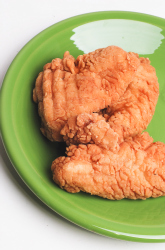
Kids may love fried chicken, but no one loves deep-frying food, and your hearts will certainly thank you for this this crunchy and satisfying healthy alternative.

What You Need:
3 cups corn flakes
4 tablespoons butter
1 pound boneless and skinless chicken breast
Kosher salt
What You Do:
Parent Prep: Place each chicken breast in between two sheets of wax paper and flatten each one out by pounding it with a rolling pin. Then slice the chicken into strips about 1 ½ inches wide by 4 inches long. Melt the butter in a pan on the stove and allow it to cool. Place the corn flakes in the food processor and pulse until they’re broken down into course crumbs.

Kids in the Kitchen: Preheat the oven to 350 degrees. Line a baking sheet with aluminum foil. Create a work area with the plate of the cut chicken strips, and then put the melted butter in a bowl and the corn flake crumbs in another bowl. Line everything up so that you have an assembly-line work station for coating your chicken. Lightly salt the chicken. Dredge (dip) a piece of chicken entirely into the butter, and then in the next bowl, roll it in the corn flakes until it is completely covered. Place on the baking sheet and repeat this process with each strip until all of the chicken has been coated.

Place the chicken in the oven and bake for about 20 to 25 minutes, having your parents turn the strips halfway into the cooking time so that they can cook evenly on both sides.

Bake Healthy Dinner Cupcakes

Bake Healthy Dinner Cupcakes

Bake Healthy Dinner Cupcakes
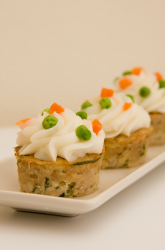
Most kids would jump at the chance to have dessert for dinner, but for parents this is a definite no-no. That is, until now: in this activity, you can make healthy “cupcakes” loaded with vegetables and protein that you won’t mind serving your child for dinner. Give these healthy treats a try to get your child involved in the kitchen!

Makes about 6 cupcakes.

What You Need:
Cupcake pan
Vegetable oil
Medium mixing bowl
Mixing spoon
½ pound ground turkey
½ cup zucchini, grated
1/3 cup onions, finely chopped
¼ cup breadcrumbs
1 egg white
½ teaspoon salt
¼ teaspoon garlic powder
1 cup mashed potatoes
¼ cup carrots, cooked and finely chopped
¼ cup cooked peas
What You Do:
Preheat the oven to 400 degrees.

Have your child combine the turkey, zucchini, onions, breadcrumbs, egg white, salt, and garlic powder together in the medium mixing bowl and mix well to form a meatloaf mixture. Make sure to wash your hands after you’re done!

Lightly grease the cupcake pan with vegetable oil.

Spoon the turkey mixture into the cupcake tins so that each tin is filled to the top but not overflowing. Smooth with a spoon so the tops are flat.

Place the turkey cupcakes in the oven and bake until the internal temperature reads 165 degrees, about 20-25 minutes.

Remove the cupcakes from the oven and let cool for a few minutes, and then carefully remove them from the pan. You may want to use a knife or rubber spatula to gently loosen them before removing them.

Arrange the cupcakes on a plate and have your child “frost” them with the mashed potatoes.

Ask your child to finish the cupcakes by scattering carrot and pea “sprinkles” on top for decoration.
Dig in!

Candied Rose Petals

Candied Rose Petals

Candied Rose Petals
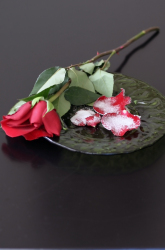
The Martha Stewart of Colonial America, Julianne Belote, suggested dessert was “incomplete without candied and preserved confections in elegant forms.” Candied rose petals were a relatively easy — and elegant! — way for early hostesses to fancy up a cake for company. Served in a dish, they made a splendid sweet for tea. Any 5th grader can follow this Colonial recipe for candying rose petals, and share the sweets with friends, family or classmates.

What You Need:
Outdoor table
Paper towels
Red rose petals
Medium bowl
Slotted spoon
Rose water
Clean spray bottle (food grade plastic)
White caster sugar
What You Do:
Prepare the work area. On a hot, dry day, help your child find a place outdoors in the sun to work. Move the table there together. He should cover the table with paper towels, overlapping them slightly so no table shows through. Take turns reading the original recipe aloud, if you dare.

“Take the fayrest rose leaves…” Fill the bowl with cold water. Pull the petals away and let them drop in the water. Swish the water and rose petals gently, then let them soak.

“…and sprinkle them with rose water…” Have your child add a tablespoon of Rose Water to the spray bottle and set the spray to fine. Don’t spray yet!

“…lay them one by one on white paper on a hot sunshiney day…” Lay the petals in a single layer on the paper towels. Now, spray the petals with the mister.

“…then beat some double refind sugar very small & sift it thinly on the roses…” Find caster sugar at a candy-making supply store or grind white sugar in a mortar and pestle until very fine, as Colonial housewives did. Show your child how to sprinkle a thin layer of sugar over the petals, a pinch at a time.

“…they will candy as they ly in the hot sun…” Stay close. The time needed to dry completely will vary depending on the weather.

“…then turn the leaves & strow some rose water on the other side, & sift some sugar in like manner…” Turn the petals, spray, sprinkle. Patience! Let the solution dry.

“…turne them often sometimes strowing on water and sometimes sifting on sugar till they be enough…” Repeat three or four times on each side. Taste-test the rose petals. The thin layers of crystallized sugar should make them slightly crunchy. If rose petals are soggy, floppy or chewy, let them dry completely. Then add a few more layers, with more drying time between.

9. “…then lay them in boxes betwixt clean papers & soe keep them all the year.” Did you notice the spelling? During the Colonial period, everyone spelled words just as they pleased. That made reading a lot harder! Today, everyone spells the same word the same way — that makes it a lot easier to follow a recipe (or a “receipt” as a colonist might have spelled it.)